
You’ve bought the perfect TV. Now comes the hardest question: Where should it go?
Walk into any home, and you’ll see TVs everywhere — above fireplaces, in bedroom corners, on patios, even in kitchens. But not every placement works. Some locations cause neck pain, glare, or heat damage.
The best TV placement balances comfort, aesthetics, and functionality. In this guide, we’ll share 6 smart placement ideas for different rooms and situations — plus which ones to avoid.
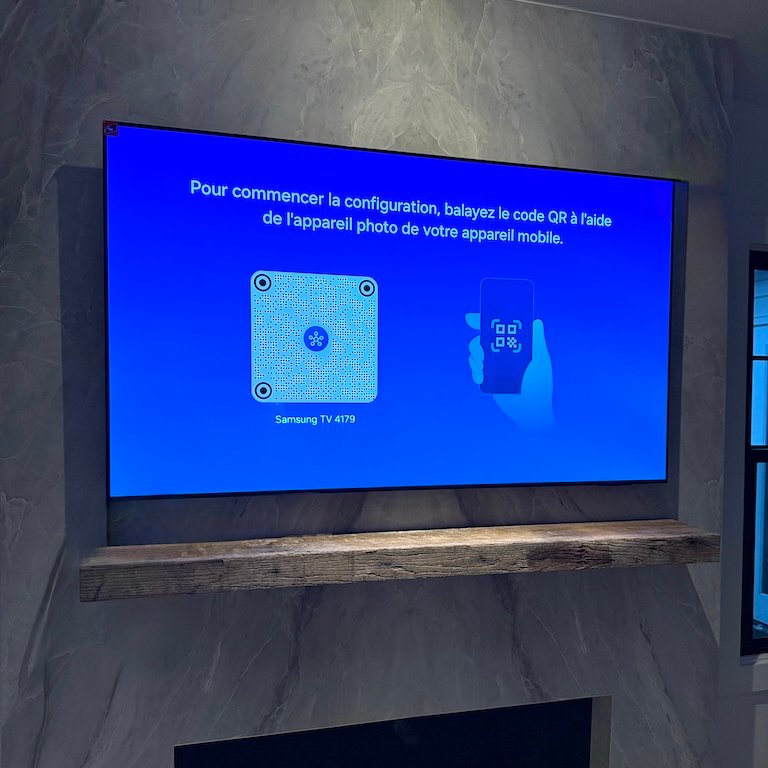
Idea #1 – Above the Fireplace (With Caveats)
The most popular — and most debated — TV location.
When it works:
You use a tilting or pull-down mount to angle the screen toward viewers
The fireplace is gas or electric (wood-burning generates more heat)
You sit at least 8–10 feet away
When to avoid:
The mantel is very high (TV center above 60 inches)
You use the fireplace daily (heat damages electronics)
There’s another wall that puts the TV at eye level
✅ Swift TV tip: Before mounting above a fireplace, we test the wall temperature with the fireplace running. If it exceeds 95°F, we recommend a different location or a heat shield.
Idea #2 – Corner Mounting (Great for Small Rooms)
Corners are often wasted space. A corner TV mount turns that dead zone into the room’s focal point.
Best for:
Small living rooms where no wall is wide enough for a large TV
Rooms with windows on multiple walls (corner placement avoids glare)
Open floor plans where the TV needs to be visible from two areas (e.g., living room + kitchen)
Mount type needed: Full-motion articulating mount (extends from the corner and angles toward seating)
Watch out for: Cable management is harder on corner walls. Plan your wire-hiding strategy before installation.
Idea #3 – Bedroom at Eye Level (Not Near the Ceiling)
Many people mount bedroom TVs too high — near the ceiling like a hotel room. That works for lying flat in bed, but not for sitting up or reading in bed.
Best height: Center of TV at 40–45 inches from the floor — the same as a living room.
Pro tip: Use a tilting mount so you can angle the TV down slightly when lying flat and push it back when sitting up.
Where to avoid: Directly facing a bright window. Morning light will make the TV unwatchable.
Idea #4 – The Media Wall (Built-In or Accent Wall)
For homeowners who want a dedicated entertainment space, a media wall is the ultimate solution.
What it is: A wall designed specifically around your TV — often with built-in cabinets, floating shelves, and hidden cable management.
Advantages:
Everything has a home (TV, soundbar, gaming consoles, streaming devices)
Wires are permanently hidden inside the wall or cabinets
Creates a high-end, custom look
Considerations: More expensive and requires planning. But for a forever home, it’s worth it.
✅ Swift TV approach: Even without a full media wall, we can install recessed outlets and in-wall cable management to achieve a similar clean look.
Idea #5 – Outdoor TV Placement (Covered Patio or Pergola)
Outdoor entertainment is increasingly popular in Orange County. But placing a TV outside requires special attention.
Requirements for outdoor TV:
Weatherproof TV (rated for moisture and temperature changes) or an enclosed cabinet
Full-sun viewing requires a high-brightness display (500+ nits minimum)
Shade is critical — direct sunlight overheats and creates glare
Professional mounting into stucco, brick, or concrete
Best location: Under a covered patio, on a wall that receives afternoon shade, with no direct rain exposure.
Warning: A standard indoor TV will fail within months outside. Don’t take the risk.
Idea #6 – Kitchen or Home Office (Small TV, Strategic Angle)
Not every room needs a 75-inch screen. Smaller spaces call for smaller, smarter placement.
Kitchen TV ideas:
Under-cabinet mount (small screen, angled down toward the counter)
Corner mount facing the island or breakfast nook
Above the refrigerator (only for casual listening, not dedicated viewing)
Home office TV ideas:
Opposite your desk (for video calls or background TV while working)
On an adjacent wall with a full-motion mount (swing toward your chair when needed)
Pro tip: Use a smaller TV (32–43 inches) in these spaces. A massive screen overwhelms the room.
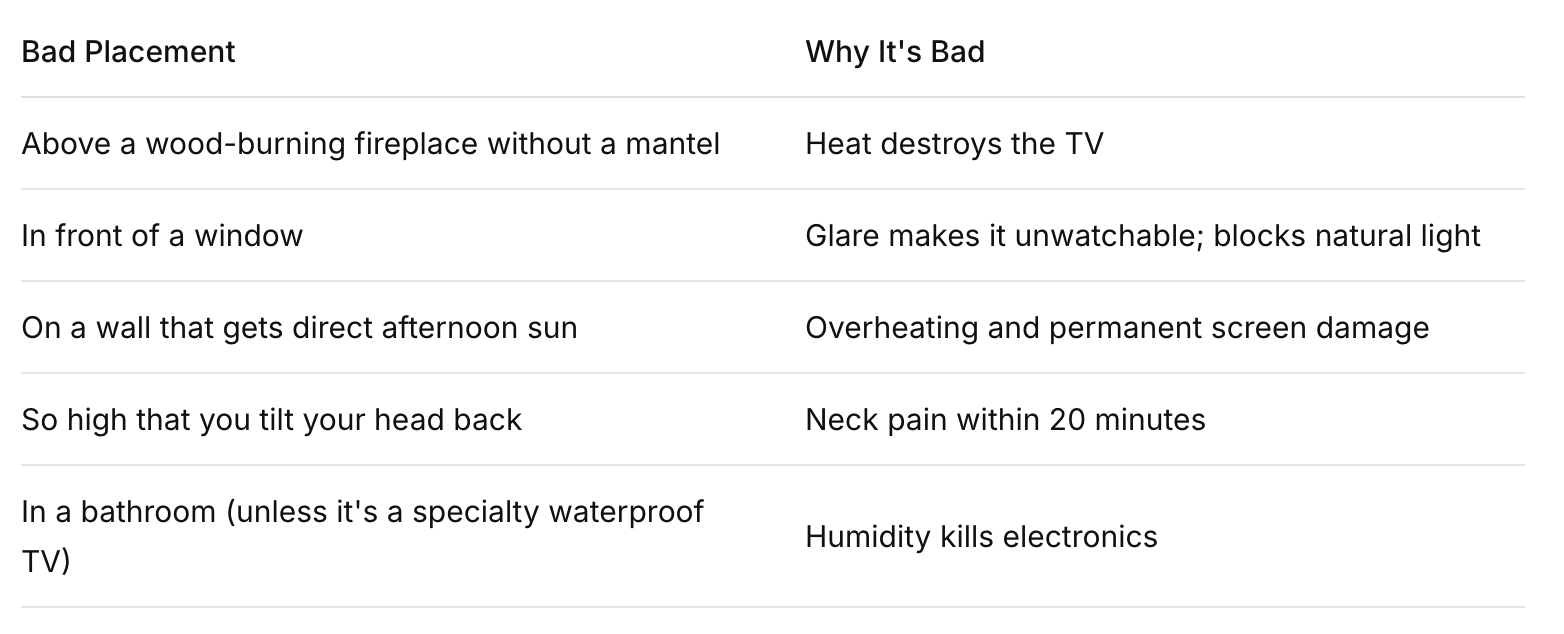
Placement Ideas to Avoid (At All Costs)
Not every “idea” is a good one. Here are placements we strongly discourage:
How to Choose the Best Placement for Your Home
Still unsure? Ask yourself these 4 questions:
1. Where do you sit most often?
Place the TV where the primary seating faces naturally — don’t force furniture to turn sideways.
2. Where does light come from?
Windows behind the couch = good (no glare). Windows facing the TV = bad (glare all day).
3. How tall are your ceilings?
Low ceilings (7–8 ft) → avoid high mounting. High ceilings (10+ ft) → you may need a tilt mount.
4. Do you watch during the day or night?
Daytime viewers need glare control (full-motion mount or strategic placement). Nighttime viewers have more flexibility.